This year marks my tenth year living in Milan.
In 2016, I landed at Malpensa Airport alone with two suitcases. I had no idea where life was going to take me. There was only the unknown, slowly unfolding in front of me.
People have often asked me why I decided to leave my life in China and move abroad. Before coming to Italy, I was living in a provincial capital in southern China. I had a stable job at a real estate company, a decent income, and a life that looked good enough to be acceptable from the outside. By most conventional standards, I was doing fine. But inside, I felt stuck. I felt as if I were living according to a script written by other people — following expectations, fitting into a system, doing what I was supposed to do. Something in me wanted more space. Since I was a child, I had always been curious about the world beyond what I already knew. Even on the same route to school every day, I would sometimes take a random turn just to see what was there. A tiny unfamiliar street corner could make my day. Somewhere along the way, a thought began to grow inside me: I wanted to go out and see a bigger world.
But when I was at university, I knew my family could not afford to send me abroad. I grew up in an ordinary working-class family. For years, my mother saved money little by little so I could finish university, and I did not want to place another financial burden on my parents. So after graduation, I went straight to work. At age 21, I packed two suitcases and moved from Beijing to Fuzhou, where I would stay for the next six years. For 6 years, I worked at the same company and lived in the same city. Almost every day, I crossed the same bridge over the river. More than 2000 crossings. Looking back, I sometimes think that all those journeys across that bridge were quietly building my courage.
At a certain point, I decided to follow the dream that had been sitting in my mind for years. When I first told my mother that I wanted to study abroad, she immediately rejected the idea. From her perspective, it made no sense. I was almost 27, a woman in China, and according to the traditional timeline, this was supposed to be the age when I settled down, found the right person, and started a family. But I had always had my own ideas, so I did not spend much energy trying to convince her. Instead, I quietly started preparing: IELTS, my portfolio, and university applications, all while continuing to work full-time. That year was exhausting. I needed my salary to support myself and to save for whatever life abroad might require. Every evening, I came home from work at around seven, made a quick dinner, and then sat down to study, often until midnight. At the time, a subway line was being built underneath my apartment, and construction continued through the night. Before exams, especially, my anxiety became intense. I remember feeling that everything depended on those moments: either I passed and jumped into the future, or I failed and remained trapped in a life I no longer wanted. For a long time, I had the strange feeling that I was trying to pull myself out of my own life by my hair. No one could really do it for me.
Eventually, I made it. About a year later, I received two university offers. I called my mother and told her: I got in, and I am going. She was shocked. I think that was the moment when the idea suddenly became real for her, and then she accepted it. Now, years later, I understand that there was love behind her fear as well. I am an only child, and she could easily have asked me to stay close, to build my life near her, to choose safety. But in the end, she let me go. My name, Fei, one of the meaning is “to fly.” She once told me that she gave me this name because she hoped I would be able to fly far one day. No one in my family had ever lived abroad before, or traveled internationally. Somehow, I became the first one to leave, and perhaps through me, a small part of her dream also traveled beyond the life she had known.
I still remember the day I arrived in Milan. When I got off the metro, I did not even know what “USCITA” meant. I simply followed the people walking toward the exit. That was how my life in Milan began. Looking back now, I had no idea how many things I would have to face over the next ten years. The master’s degree itself was not the hardest part. In fact, I enjoyed it. For the first time, I was studying things that genuinely fascinated me — art, architecture, culture, design, and the stories behind them. I was also lucky with the people I met. During my first two and a half years in Milan, I lived with several roommates, many of whom turned out to be kind and interesting people. My cooking skills helped. Food is a very efficient way to make friends. Some of those roommates became real friends, and even now, years later, we still keep in touch from time to time. I also traveled as much as I could. Exploration had always been part of me, and I loved driving, so road trips quickly became one of my favorite ways to travel. I would rent a car, gather a few friends, and just go — through Italy, Switzerland, France, Spain, the Netherlands, and many places in between.
During the final year of my master’s program, I needed an internship in order to graduate. At a friend’s party, someone mentioned the company where I still work today. I sent my CV through the website, and in April 2018 I received a call for an interview. That was when I met Francesca, my former boss. She was elegant, warm, and very Italian. The interview was short, and a week later HR offered me a three-month trial contract. They needed me to start immediately because Milan Design Week was about to begin. I accepted. By then, after two years in Milan, my savings were almost gone, and the salary was enough to let me stay. Just like that, I entered a completely different world.
I had no background in sales and no retail experience. My previous career had been in project management, dealing with suppliers, contractors, construction sites, schedules, and problems. But I was curious, and I did not want to give up just because something felt unfamiliar. The beginning was difficult. My Italian was still limited, and I received almost no formal training. An older colleague handed me two catalogues and basically told me to study them myself. So I did. I learned by watching people, by listening, by asking questions, by making mistakes, and by solving problems one at a time. But the hardest part was not learning the products. I have always been quite good at learning new things. The hardest part was entering a world that felt completely foreign to me. I still remember the first time I opened a price list and saw that a single decorative cushion cost around two thousand euros. I stared at it and thought: who on earth would spend almost a month’s salary on a cushion? I soon discovered that the answer was: quite a few people.
Because I was Chinese, one of the reasons the company hired me was to work with Chinese clients. So I started learning how to understand them, how to listen to what they really wanted, how to answer every question, and how to solve every problem I could. Slowly, it started working. I began closing orders quite quickly, and my results improved, but the pressure grew at the same time. I was the only Chinese employee in an Italian company, and for a long time I felt like an outsider. I did not always feel accepted by the group, but I did not know what else to do except continue working. During that period, I even started smoking. After work, I would sometimes walk to the Duomo, sit on the steps in the square, light a cigarette, and watch tourists from all over the world standing there in awe of the cathedral. I would sit among them feeling exhausted, lonely, stressed, and sad. But deep inside, I knew one thing very clearly:
I did not want to give up.
Eventually, I became one of the strongest performers in the team. My boss extended my contract for another 3 months. As a student, that was the maximum amount of time I could work, so we agreed that I would return to university for three months, finish my thesis, graduate, and then come straight back. Everything seemed perfectly planned. Which, of course, is usually when life decides to change the plan. After graduation, I was happy to receive a full-time offer, but then the company asked me for a residency document I did not have. I did not even fully understand what it was at the time. As an international student, I had not needed it in order to study, but I needed it to work. Without that document, the company could not officially hire me.
Suddenly, everything collapsed. I tried desperately to find a solution, but the apartment I was living in had been rented unofficially, and my landlord refused to help me. To obtain the documents I needed, I had to move to a new apartment with a proper registered rental contract. At the same time, I also had to wait for the bureaucracy to process my job-seeking residence permit. For the first time, none of the important things depended on me. All I could do was wait, and waiting terrified me. After two and a half years in Milan, my savings were almost gone. I did not know how I was going to pay the next month’s rent. I could not work normally, I could not speed up the paperwork, and I could not control the timeline. One real-life problem after another appeared in front of me. That was the darkest period of my first ten years in Milan.
For weeks, I barely slept. But eventually, something changed inside me. I stopped asking, Why is this happening to me? and started asking, What can I do now? I decided to teach myself 3D rendering because I knew it was a skill that could help me find freelance work quickly. A month later, a small design studio hired me to create renderings for a yacht project. At the same time, my ex-boyfriend Joaquin helped me financially so I could pay my rent. I cut my expenses to almost nothing. For a while, I ate pasta with tomato sauce every day. And I worked. After three months, the partners at the studio told me they were happy with what I was doing. They realized that I could offer more than rendering. I could communicate with clients, understand projects, and help them find business opportunities. They wanted to keep me long-term. That was the moment I began to feel relieved, not because my situation had suddenly become easy, but because I started to understand something important:
No matter what happens, I will find a way.
Six months later, my residence permit finally arrived. My old boss called me back, and this time she offered me a permanent contract immediately. After months of feeling as if I had been suspended in mid-air, life finally gave me solid ground again. The company itself soon went through another difficult period. Almost everyone was laid off. Only my boss, another colleague, and I remained. But by then, something in me had changed. I was no longer frightened so easily. I simply kept working. Then the situation changed again. A large American group acquired the company and began restructuring it. Slowly, the work I had done started to pay off. My results were recognized, my income improved, and for the first time in a long while, life started to feel kind.
Eventually, I began looking for an apartment, and then I bought one — the home I live in now. Buying it, renovating it, and moving into it brought another collection of challenges, of course. Nothing in my life has ever seemed to happen without a little drama. But something had changed. My life in Milan was no longer temporary. I had begun to put down roots. Ten years passed almost without me noticing. Somewhere along the way, Milan became home. I learned the city, the language, and how to work here. I learned how to build a life here. Eventually, I even brought my parents from China so they could experience part of the life I had created. Sometimes I still find it strange to think about the girl who arrived at Malpensa with two suitcases and did not understand the word “USCITA.” She had absolutely no idea what was waiting for her. Maybe that was a good thing.
If you have read this far, I want to end with something I once wrote on Weibo:
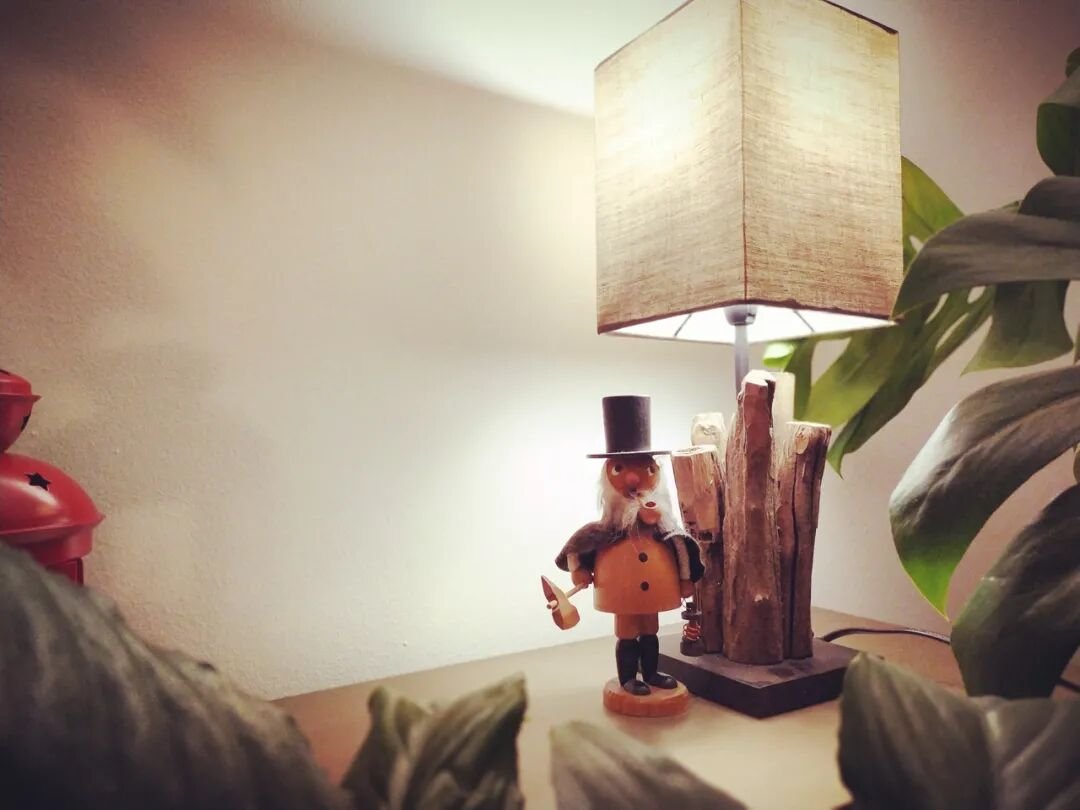
When I was very young, I often found myself thinking about destiny. Back then, I had no idea what my life would become or where the future would take me. The only thing I could really control was the tiny world in front of my desk. A small lamp with warm, dim light accompanied me through countless days and nights.
At seventeen, I left home and traveled north for university after the national college entrance exam. The little desk in front of me became a university study room, then the lower bunk of a six-person dormitory on the eleventh floor. Under my bed was another small desk, and on it, once again, stood a little lamp.
After graduating from university, I packed my belongings and moved south alone. I began my career in a provincial capital in southern China. The bunk bed was replaced by a small room in the city, and that was where I truly began living independently. Over the years, I moved three times. The last place was opposite a newly built commercial complex in the city center. Outside my window, colorful neon lights flickered every night, while the sound of late-night subway construction often disturbed my sleep. Later, I found myself back at a desk by the window again, this time studying for the IELTS exam.
And then, not long after, the commercial complex outside my window was replaced by a large plane tree in a residential neighborhood on the outskirts of Milan. I watched that tree change with the seasons for three years, its colors shifting from spring to autumn and back again. The little lamp on my desk had become a simple IKEA lamp provided by my landlord.
After graduate school, the view outside my window changed once more. This time, there was a small park. The lamp on my desk had changed too. It was now a smart lamp connected to Alexa. Every evening when I came home from work, all I had to do was call out, and the light by the window would come on. And on countless sleepless nights, I would switch on that lamp and ask Alexa to play some music for me.
And now, after thirteen years of life carrying me from one place to another, my home in Milan is slowly becoming complete. Once, my whole world seemed to fit beneath the light of a single desk lamp. Now, warm lights glow in different corners of my home. That tiny piece of space has slowly grown into a place where a family could live. After so many years of moving, adapting, surviving, and beginning again, I have finally built, little by little, the home I once dreamed of having.
You ask me what destiny is:
Perhaps destiny is the light by my window — still burning, never extinguished, through all these years.


Leave a Reply